
Heat pump in simultaneous operation: More efficiency from every degree of temperature
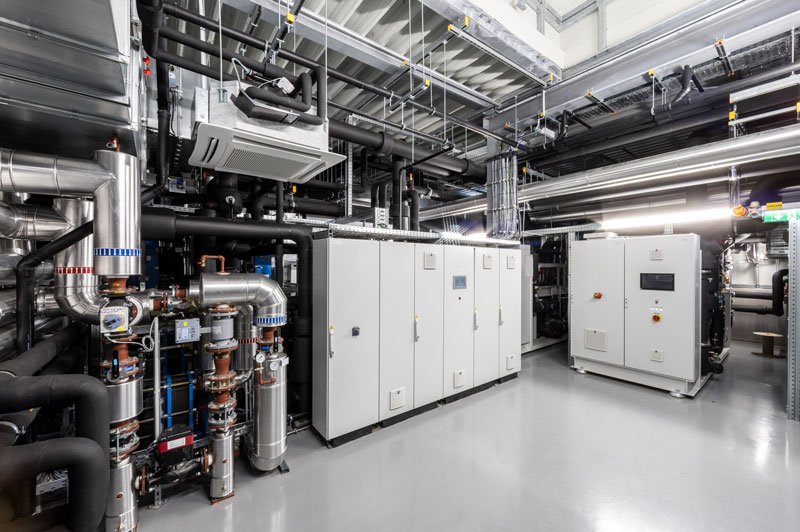
APESS develops individual heat pump systems that combine complex customer requirements with proven technology to create high-performance showcase projects. One of these systems is based on the concept of simultaneous operation of heat pumps, which enables particularly high efficiency and maximum flexibility.
What exactly is behind it. You can read here.
Rethinking energy: flexible systems through separate circuits
The heat pump concept presented is based on separate glycol and water circuits on the source and sink side. This means that several thermal sources and sinks can be used in parallel or alternately and automatically prioritized. Frost-proof glycol circuits ensure operation at low temperatures, while water circuits enable particularly efficient heat transfer. Decoupling the temperature levels reduces losses and supports stable, energy-optimized partial load operation. The control system uses the most efficient combination of source and sink in each case, thereby increasing the overall performance of the system. In the case of parallel requirements, the system enables decoupled temperature control, whereby heating and cooling are generated exactly as they are needed.
More independence: heat generation without oil, gas or district heating
A central requirement for the development of this system architecture was the complete heat supply without fossil fuels and without a district heating connection. The concept is therefore designed for the use of internal and external low-temperature sources – including waste heat, recooling circuits or outside air systems. The dual use makes it possible to map varying temperature and load conditions and ensure the heat supply even under changing conditions.
Two circuits, one system: maximum efficiency through double connection
The technical basis is a heat pump with two evaporators and two condensers, each connected via glycol or water circuits. This architecture decouples media and temperature levels, allowing flexible integration of different sources and sinks. While the glycol circuit enables safe operation at low temperatures, the water circuit optimizes the heat transfer and thus the performance figures during operation. A continuous control strategy evaluates temperature, load and availability and guides the system to the most efficient operating point possible.
Intelligently controlled: Always the best source in use
The automatic prioritization of thermal sources ensures energy-efficient operation with a minimum temperature range. If, for example, process waste heat is available at a moderate temperature level, this is used preferentially. If the temperature drops, an alternative source takes over – or the system operates in parallel if this improves efficiency. The separate circuit management also supports stable partial load operation, reduces switching frequencies and sustainably increases the seasonal performance factor.
Heating and cooling at the same time: efficiency advantage in dynamic applications
A key advantage of the architecture of combined hydraulic circuits is the decoupled provision of different temperature levels, which means that heating and cooling can be generated as required.
Excess condensation heat can be used directly as useful heat, while the evaporator provides cooling for processes or building cooling. This significantly increases system efficiency and reduces the need for external recooling – especially in industrial applications with parallel thermal requirements.
Proven in practice: Successfully implemented under challenging conditions
The concept has already been implemented in real systems. Operating experience to date shows that the combined architecture confirms the expected benefits: improved annual performance figures, stable partial load behavior and high reliability – and all of this under the requirement to operate completely without oil, gas or district heating. In a next step, selected performance data and practical examples can further illustrate how the system works.
Do you have questions?
